
Last updated: October 19, 2026
What the USD 50,000 limit means
The numbers below come from Citibank Korea's English page on overseas remittance. Other banks follow the same law, but their forms and online steps differ, so check yours.
| Item | What the bank page says |
|---|---|
| Yearly limit without proof of funds | USD 50,000 for foreigners and non-residents |
| Step before you send | Name a foreign exchange bank (외국환은행) in advance |
| Over USD 50,000 | Submit proof of income and set a remittance limit at the branch |
| Who counts the limit | All banks together; you are responsible if you go over |
| Online limit per transfer | USD 50,000; USD 10,000 if the money comes from a foreign-currency account |
The page also says some uses count toward the same USD 50,000. Examples are small amounts of foreign currency carried out without a customs declaration, and a foreign resident's credit card payments abroad.
What to bring to name your foreign exchange bank
- Passport
- A document from your employer that proves your wages
- A visit in person to a branch of the bank you pick
You name one bank, and that is where you do your remittances. Citibank says to visit a branch before sending. Other banks may let you do part of this in their app, so ask before you go.
Show this: 외국환은행 지정하러 왔어요. 해외송금을 하고 싶어요.
Steps to send money
- Pick your bank and name it as your foreign exchange bank at a branch.
- Check your yearly total. Add up what you sent through every bank this year.
- Send the transfer at the branch or online, if your bank allows it for foreigners.
- Keep the receipt. Keep your pay documents too, in case the bank asks later.
When you need more than USD 50,000
Show income documents at your branch and set a remittance limit. Ask the bank which papers it accepts. Tax payment records and pay slips are common examples, but the bank decides.
Changes to watch for
Korea changed some overseas remittance rules in 2023. The Citibank page lists a USD 100,000 yearly limit for Korean residents, but it keeps USD 50,000 for foreigners. Rules can change again, so confirm the number with your bank before a large transfer.
Limits of this guide
This page does not list fees or exchange-rate margins. They differ by bank and by method, and the bank page does not give them. Compare at least two banks before you send.
Sources
This guide is general information, not financial or legal advice. Rules change, so confirm limits and documents with your bank or the Financial Supervisory Service before you send.
Related guides
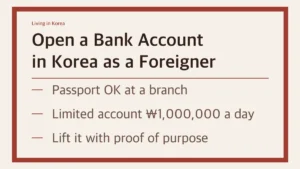 Open Bank Account in Korea Foreigner Guide: Passport Works at a Branch, ₩1,000,000 Daily LimitCan a foreigner open a bank account in Korea without a Residence Card? Yes, at a branch with a passport and proof of…
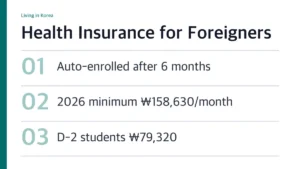 Health Insurance for Foreigners in Korea (2026): Who Must Join and What You PayMost foreigners staying in Korea are enrolled in national health insurance automatically. Here is when coverage…
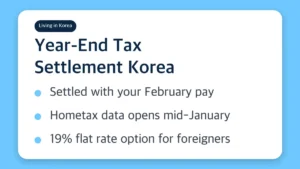 Year-End Tax Settlement Korea: Done With Your February PayHow 연말정산 works for foreign employees in Korea: who does it, the January to March timeline, the 19% flat rate option…