
Korean Wedding Gift Money Is ₩100,000 to Attend, ₩50,000 to Skip
How much to give at a Korean wedding, with amounts by relationship, what bank data and surveys show, how to fill out the white envelope, and what to do at the desk.
Plain-English explanations of Korean holidays, customs, systems and terms that confuse newcomers.
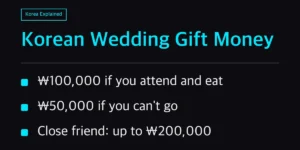
How much to give at a Korean wedding, with amounts by relationship, what bank data and surveys show, how to fill out the white envelope, and what to do at the desk.
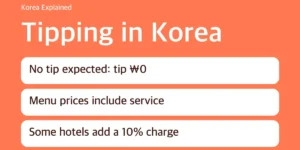
You do not need to tip in Korea. Why menu prices already include service, what the 10% hotel charge means, and what to do when a cafe tip box or taxi app asks for more.

Jeonse (전세) means paying a large lump-sum deposit instead of monthly rent, then getting it back when the lease ends. Here is how it differs from wolse, why it exists, and how foreign tenants protect the deposit.
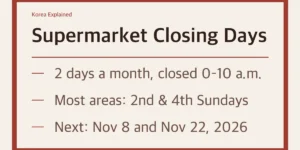
Big supermarkets in Korea must close two days a month and cannot open before 10 a.m. Most areas use the 2nd and 4th Sundays, but about 133 of 351 big-chain stores now close on weekdays. Here is the rule, the exceptions and what stays open.
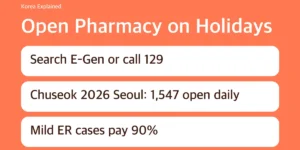
Most neighborhood pharmacies and clinics close on Seollal and Chuseok, but each holiday the government lists the ones that stay open. Here is how to find them, who to call, and what the ER costs.

What happens to kimchi at Incheon security, how to pack it for a flight, and why you must declare it when you enter the United States.
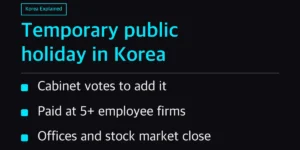
Korea can add an extra day off at short notice. Here is how the Cabinet decides, how it differs from a substitute holiday, what closes, and whether your employer must pay.
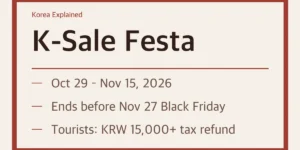
Korea’s biggest fall sale, once called Korea Sale Festa, is K-Sale Festa in 2026 and runs Oct 29 to Nov 15. Here is what it is, who it helps, and how to add a tax refund.
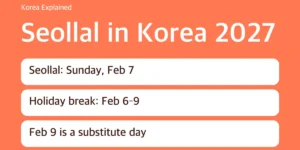
Seollal (Korean Lunar New Year) 2027 is on Sunday, February 7, and the break runs February 6–9. Here is what families do, what closes, what stays open, and how a foreigner can join in.
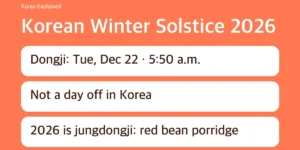
Dongji, the Korean winter solstice, falls on Tuesday, December 22, 2026. Here is why Koreans eat red bean porridge (patjuk) that day, why 2026 is a “middle Dongji,” and where you can try a bowl.