
Last updated: October 12, 2026
Busan is long and thin, so your area matters
Busan does not have one downtown. The city stretches along the coast, with the beaches (Haeundae and Gwangalli) on the east side and the old port, markets and Busan Station on the west side. Seomyeon sits in the middle, where subway Line 1 and Line 2 cross.
If you stay on the wrong end for what you plan to do, you will spend a lot of your trip on the subway. The good news: the subway is cheap, announcements are in English, and every area below has a station within walking distance.
Busan areas compared
| Area | Best for | Subway station | From Gimhae Airport | Night view and food |
|---|---|---|---|---|
| Haeundae (해운대) | Beach trips, big hotels, families | Line 2, Haeundae Station | Airport Bus Line 1, 9,500 won, every 60 min | Beach promenade, Dongbaekseom Island, seafood and cafe streets |
| Gwangalli (광안리) | Night view, couples, a quieter beach | Line 2, Gwangan Station, Exit 3 | Light rail to Sasang, then Line 2 (card total 1,800 won) | Gwangan Bridge lights, Saturday drone show, raw fish restaurants |
| Seomyeon (서면) | First-timers, sightseeing by subway, nightlife | Line 1 and Line 2, Seomyeon Station | Airport Bus Line 2, 7,500 won, every 60 min | Street food alleys, bars, department stores, no beach |
| Nampo-dong (남포동) | Markets, street food, budget stays | Line 1, Nampo Station or Jagalchi Station | Light rail to Sasang, Line 2 to Seomyeon, Line 1 south | Jagalchi Market, BIFF Square, Busan Tower, Gamcheon nearby |
| Busan Station (부산역) | One night, late KTX arrival, early train out | Line 1, Busan Station | Same as Nampo, one stop earlier on Line 1 | Chinatown and Texas Street, fewer evening options |
A few notes on the table:
- Haeundae and Seomyeon are the only areas with a direct airport bus. Everyone else takes the light rail and the subway, or a taxi.
- Gwangalli and Haeundae are both on Line 2 and only a few stops apart, so you can stay in one and visit the other in the evening.
- Nampo-dong and Busan Station are both on Line 1, close to each other, and far from the beaches. Expect a long subway ride to Haeundae.
Haeundae: stay here if the beach is the trip
Haeundae Beach is the most famous beach in Korea and is listed among the 100 Must-Visit Tourist Spots of Korea. The beach is lined with tall hotels, restaurants and an aquarium, and the Dongbaekseom Island walk is at the west end. This is where most of the large international hotel brands are, so it is also the easiest area if you want a familiar hotel and English at the front desk.
It is the busiest area in summer and during festivals, and rooms cost more than in Seomyeon or Nampo. In autumn and winter the beach is quiet, which some visitors like and others find flat. If you are coming in November for the Busan Fireworks Festival, Haeundae is a good base: the Dongbaekseom side is one of the official viewing areas.
How to get there: subway Line 2, Haeundae Station. From Gimhae Airport, Airport Bus Line 1 stops at Haeundae Beach Entrance and Dongbaekseom Island Entrance.
Show this: 해운대해수욕장으로 가 주세요.
Gwangalli: the night view, without the Haeundae crowds
Gwangalli Beach faces Gwangan Bridge, which lights up every night, and the beach road is full of cafes and rooftop bars. The free drone show flies over the water on Saturdays, and the raw fish restaurants at the Millak end are the local way to eat seafood. The area feels calmer than Haeundae and has more small hotels and guesthouses than big resorts.
The trade-off is transport. There is no airport bus stop at the beach, so from Gimhae Airport you take the light rail to Sasang, change to Line 2, and ride to Gwangan Station. With a transport card the light rail plus subway transfer costs 1,800 won for an adult.
How to get there: subway Line 2, Gwangan Station, Exit 3, then walk down to the beach.
Seomyeon: the safe choice for a first visit
Seomyeon is the transit center of Busan. Seomyeon Station is where Line 1 and Line 2 meet, so you can reach Haeundae and Gwangalli (Line 2) or Nampo-dong, Jagalchi and Busan Station (Line 1) without changing trains more than once. The streets around the station are packed with restaurants, bars, cafes and late-night food, and hotel prices are lower than at the beach.
What you do not get is a beach view or a sea breeze. If your plan is mostly sightseeing (Gamcheon Culture Village, Jagalchi Market, a temple, one beach day), Seomyeon saves you time every single day. If your plan is "wake up and walk to the sand," choose Haeundae or Gwangalli instead.
How to get there: subway Line 1 or Line 2, Seomyeon Station. From Gimhae Airport, Airport Bus Line 2 stops at Seomyeon Station (Lotte Department Store), fare 7,500 won.
Show this: 서면역으로 가 주세요.
Nampo-dong and Jagalchi: markets, street food, cheap rooms
Nampo-dong is the old center of Busan. Jagalchi Market, the city's main seafood market, is a short walk away, and BIFF Square, Gukje Market and Busan Tower are all on foot. This area has many budget hotels and guesthouses, and it is the best base if you plan to visit Gamcheon Culture Village, Taejongdae or Songdo Beach on the west side.
The downside is distance from the beaches: Haeundae is a long ride on Line 1 and then Line 2. There is no sand here, and the night view is of the port rather than a lit-up bridge.
How to get there: subway Line 1, Nampo Station or Jagalchi Station.
Busan Station: for one night or a late train
If you arrive late on the KTX from Seoul or leave early the next morning, a hotel near Busan Station saves you a subway ride with luggage. The station is on Line 1, one stop from Nampo-dong, and Chinatown and Texas Street are right across the road. For a stay of two or more nights, most visitors will be happier in one of the other four areas.
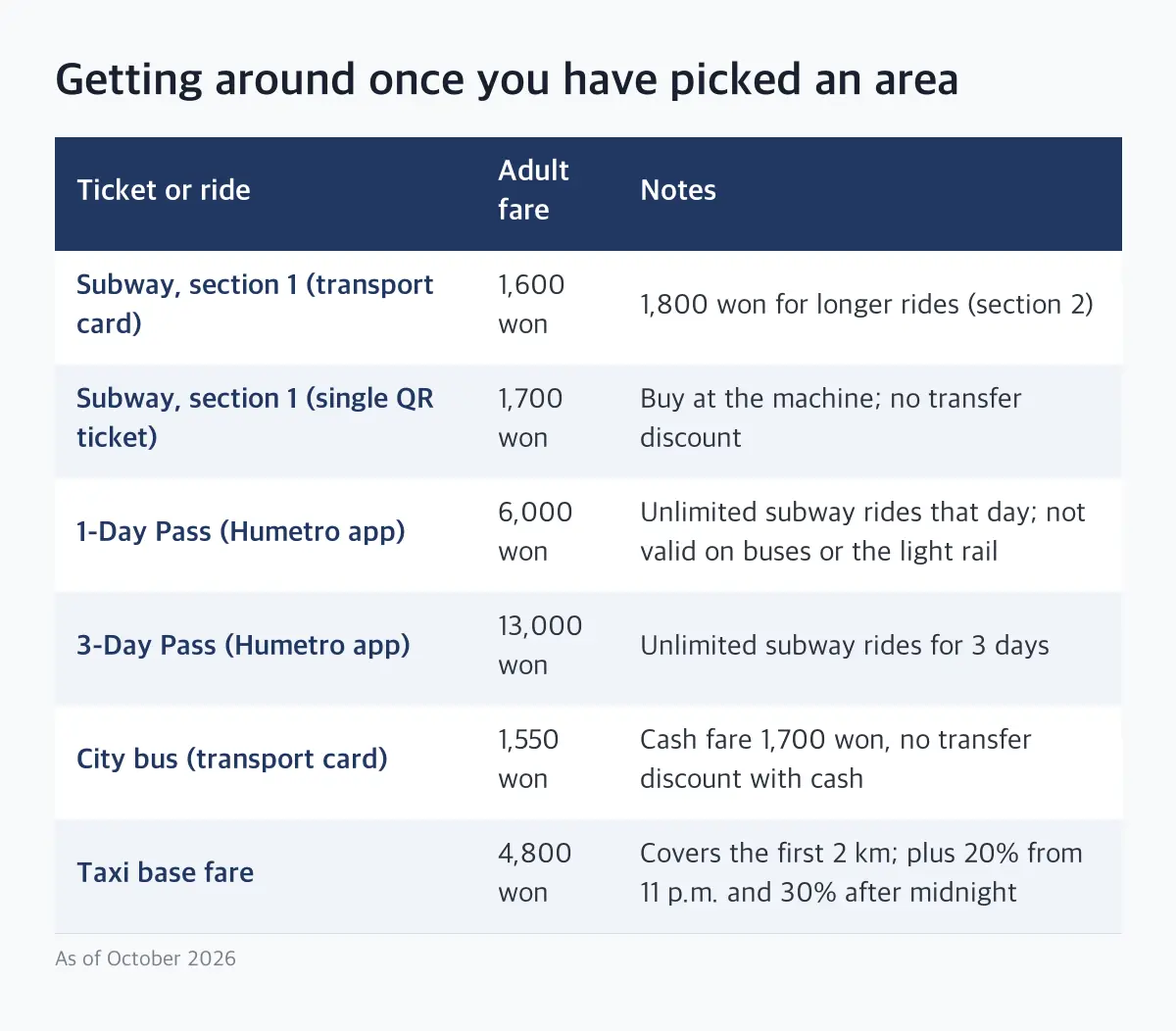
Getting around once you have picked an area
| Ticket or ride | Adult fare | Notes |
|---|---|---|
| Subway, section 1 (transport card) | 1,600 won | 1,800 won for longer rides (section 2) |
| Subway, section 1 (single QR ticket) | 1,700 won | Buy at the machine; no transfer discount |
| 1-Day Pass (Humetro app) | 6,000 won | Unlimited subway rides that day; not valid on buses or the light rail |
| 3-Day Pass (Humetro app) | 13,000 won | Unlimited subway rides for 3 days |
| City bus (transport card) | 1,550 won | Cash fare 1,700 won, no transfer discount with cash |
| Taxi base fare | 4,800 won | Covers the first 2 km; plus 20% from 11 p.m. and 30% after midnight |
Buy a transport card (T-money or Cashbee) at a convenience store when you land. It works on the subway, buses, the light rail and taxis, and it gives you free transfers within 30 minutes.
Show this: 교통카드 하나 주세요.
Getting from Gimhae Airport to your hotel
Busan reorganized its airport buses on July 31, 2025. Older guides still list a 10,000-won limousine or city bus 2029; both are gone.
The current options, from Busan Metropolitan City:
- Gimhae Airport Bus Line 1 (Haeundae): 9,500 won, every 60 minutes, first bus from the airport at 7:10 a.m. and last bus at 9:40 p.m. It stops at Haeundae Beach, Dongbaekseom Island, BEXCO and Centum City. Book in the Bustago app or buy at the ticket machine at Gate 4 on the 1st floor. The bus is cashless; pay by credit card or transport card.
- Gimhae Airport Bus Line 2 (Seomyeon): 7,500 won, every 60 minutes, first bus from the airport at 7:00 a.m. and last at 10:00 p.m. It stops at Seomyeon Station and ends at Bujeon Station.
- Light rail plus subway: the Busan-Gimhae Light Rail runs from the airport to Sasang Station, where you change to Line 2. Trains run from about 5:00 a.m. to midnight. With a transport card the light rail is 1,300 won for section 1, and the transfer to the subway brings the total to 1,800 won. This is the cheapest option and works for every area in this guide.
- Taxi: base fare 4,800 won for the first 2 km, with late-night surcharges. Deluxe (black) taxis start at 7,500 won.
Two bags under 30 kg total ride free on the airport bus. If you land after the last bus, the light rail or a taxi is your option.
Book early for the Busan Fireworks Festival
The Busan Fireworks Festival is on Saturday, November 7, 2026, over Gwangalli Beach, Igidae and Dongbaekseom Island. Paid seats are on sale until November 6 at 5 p.m., but hotel rooms in Gwangalli and Haeundae fill up weeks earlier. If your trip overlaps that weekend, book your room before you book anything else, and expect higher prices on Friday and Saturday nights. Seomyeon and Nampo-dong usually still have rooms, and both are a direct Line 2 or Line 1 ride from the festival.
FAQ
Where should I stay in Busan for the first time?
Seomyeon if you want to see the whole city by subway, Haeundae if you want the beach outside your door. Both have a direct airport bus.
Where should I stay in Busan without a car?
Any of the five areas above. All of them have a subway station within walking distance, and you will not need a car in Busan.
Where should I stay in Busan on a budget?
Nampo-dong and Seomyeon have the most budget hotels and guesthouses. Beach-front rooms in Haeundae cost the most, especially in summer and on the fireworks weekend.
Where should I stay in Busan for one night?
Near Busan Station if you arrive or leave by KTX, or in Seomyeon if you want one evening of food and bars before moving on.
Sources
- Busan Metropolitan City: Renovated Airport Bus Operations Commence on July 31 (2025)
- Busan Transportation Corporation: Urban rail fare guide
- Busan Transportation Corporation: Busan Gimhae light rail transit
- Busan Metropolitan City: Public Transportation (bus and taxi fares)
- Busan Fireworks Festival official site
Related guides
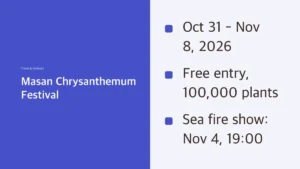 Masan Chrysanthemum Festival 2026: Oct 31–Nov 8, Free by the SeaMasan fills its waterfront with 100,000 chrysanthemum plants from October 31 to November 8, 2026. Entry is free.…
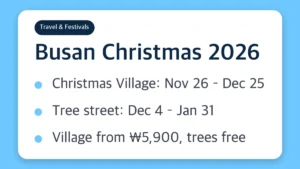 Busan Christmas Market 2026: Village Nov 26, Tree Festival Dec 4Busan has two Christmas events with similar names. Christmas Village Busan is a paid market at Busan Cinema Center…
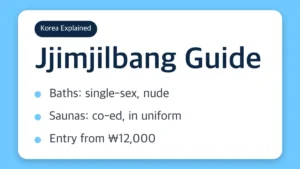 Jjimjilbang Guide: Nude Baths, Clothed Saunas, From ₩12,000How a Korean jjimjilbang works from the shoe locker to the sleeping room, what entry, overnight stays and a body…