
Last updated: November 18, 2026
What are Korea's winter street snacks?
From late autumn, small carts and tents with gas burners show up near subway exits, markets and bus stops. They sell a short list of hot, cheap snacks you can eat standing up.
| Snack | Korean | What it is |
|---|---|---|
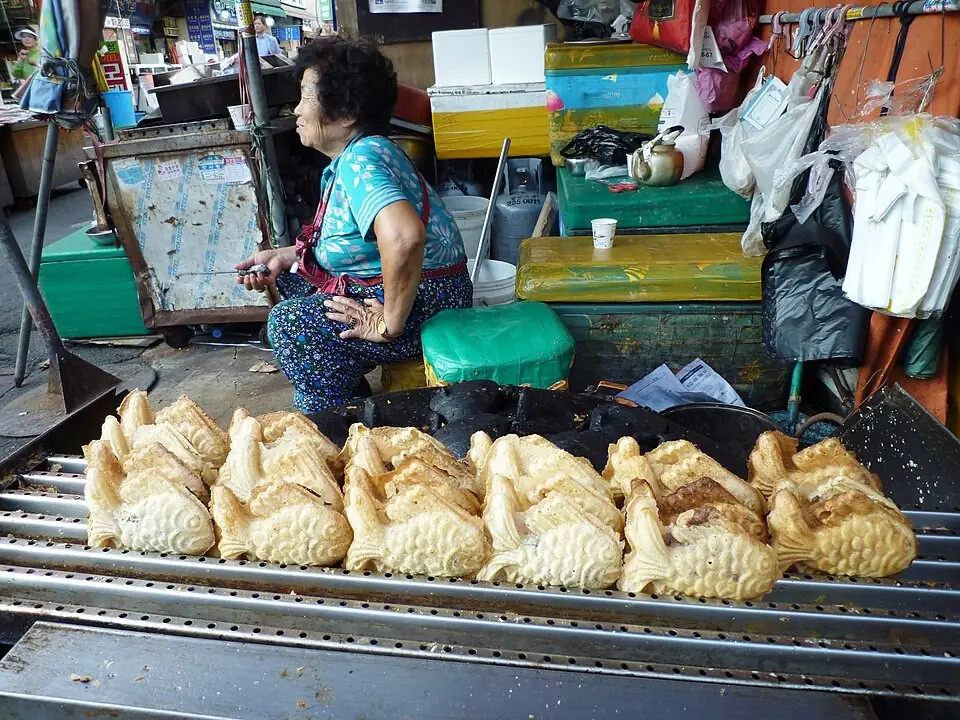
| Bungeoppang | 붕어빵 | Fish-shaped waffle batter pastry filled with sweet red bean paste or custard cream (슈크림) |
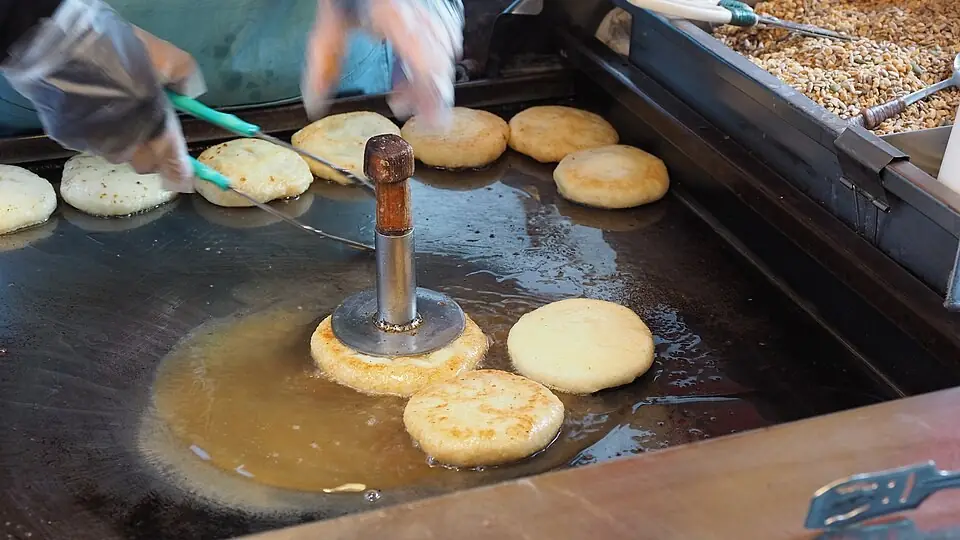
| Hotteok | 호떡 | Pan-fried dough pancake filled with brown sugar syrup, often with seeds or nuts |
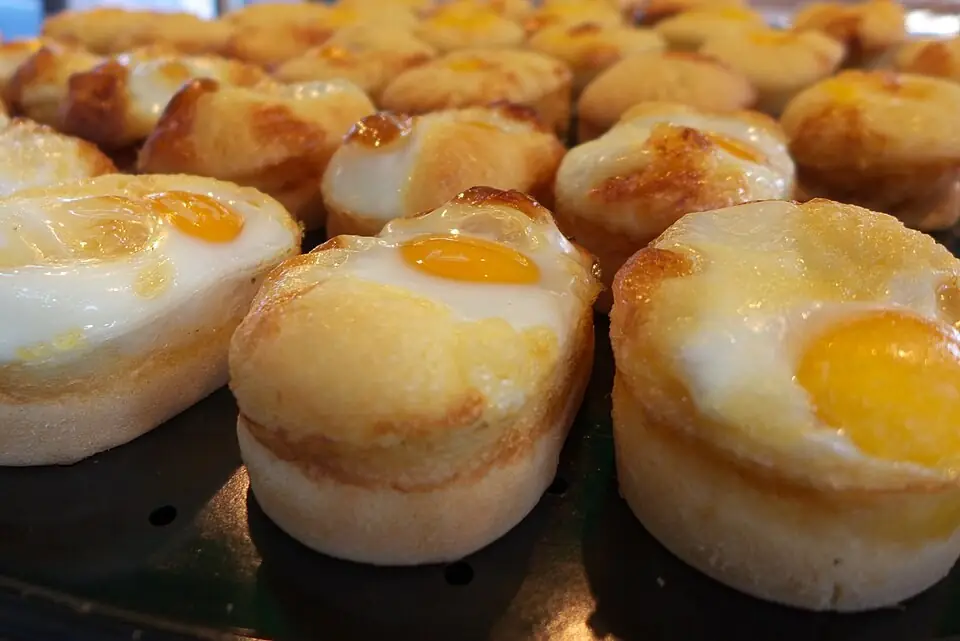
| Gyeranppang | 계란빵 | Small oval sweet bread baked with a whole egg on top |
| Eomuk or odeng | 어묵 / 오뎅 | Fish cake on a skewer, kept in hot broth that you drink from a paper cup |
| Gun-goguma | 군고구마 | Sweet potatoes roasted in a drum oven |
| Gun-bam | 군밤 | Roasted chestnuts, sold peeled or in the shell |
| Tteokbokki | 떡볶이 | Chewy rice cakes in sweet-spicy red chili sauce |
Bungeoppang means "carp bread". There is no fish in it. A near twin called ingeoppang (잉어빵, "koi bread") is sold the same way and costs about the same.
When are the stalls open?
Street snack season runs roughly from late October to March. Vendors start when the weather turns cold, and the Karrot app's community bungeoppang map for the 2024-25 winter ran until late March or early April, which matches when demand fades.
Hours depend on the stall. A Mapo-gu stall that the Herald Business reporter worked at in November 2025 opened at 10 a.m. and closed at midnight, but many carts sell only in the afternoon and evening rush. Carts also close early when they sell out or when the weather is bad.
Stalls are getting harder to find. Seoul had 6,079 street stalls in 2020 and 4,741 in 2024, according to a November 2025 Sidae Ilbo report. Rising ingredient costs and city crackdowns on unlicensed carts are the two reasons vendors give. Koreans even have a word for living near a reliable cart: bungsegwon (붕세권), a joke on the word for "near a subway station".
How much does Korean street food cost in 2025-26?
Prices are set by each vendor and change with ingredient costs. Red beans are the main cost for bungeoppang: the Korea Agro-Fisheries & Food Trade Corporation (aT) wholesale price for domestic red beans was ₩784,200 per 40 kg in October 2025, more than 1.5 times the price a year earlier. That is why the old "3 for ₩2,000" price is disappearing.
These are prices reported in Korean news during the 2025-26 winter. The 2026-27 season is just starting, so treat them as a floor, not a ceiling.
| Snack | Typical price reported | Where and when |
|---|---|---|
| Bungeoppang | ₩1,000 each | Many stalls in downtown Seoul, Yeongdeungpo and Dongdaemun, Oct–Nov 2025 |
| Bungeoppang | ₩1,000 to ₩1,500 each | Gangnam and Jongno, and Gwangjang Market, late 2025 |
| Bungeoppang | 3 for ₩2,000 | Near City Hall Station, Seongbuk-gu, Mapo-gu and Suwon, Nov–Dec 2025 |
| Hotteok | 2 for ₩3,000 | Mapo-gu stall, November 2025 |
| Gyeranppang | 2 for ₩3,000 | Same Mapo-gu stall |
| Steamed corn | 2 for ₩3,000 | Same Mapo-gu stall |
| Fish cake skewer | ₩1,000 | Tent bar in front of Gangnam Station, 2025 |
| Fish cake skewer | ₩1,200 to ₩1,500 | Haeundae Market and Kkangtong Market, Busan, 2025 |
| Tteokbokki | ₩5,000 to ₩7,000 a plate | Myeongdong food street, March 2026 |
A Hankyung report in November 2025 put the average across all bungeoppang stalls, including small unregistered ones, at about ₩733 each, or close to 3 for ₩2,000. So you will still find cheaper carts in residential neighborhoods than in tourist areas.
Two things to watch:
- Tourist-spot markups. In 2025, stalls near a famous temple in Busan charged ₩3,000 for a single fish cake skewer, two to three times the price at Haeundae Market. Local officials said they cannot force vendors to lower prices. Ask the price before you order.
- Premium versions. Some vendors now sell "premium" bungeoppang with chocolate or other new fillings to justify a higher price. The classic red bean and custard ones are the cheap ones.
How do you find a bungeoppang stall? Use a map app
Most carts are not on Google Maps or Naver Maps as businesses. Koreans use crowd-sourced maps where users pin carts and confirm they are still there.
| App or map | What it shows | Tip |
|---|---|---|
| 3 Thousand Won in My Heart (가슴속 3천원) | Bungeoppang, hotteok, fish cake, takoyaki and other snack carts and food trucks. About 3,000 spots and over 1.2 million members as of November 2025 | Open a stall's page and look for recent visit check-ins. Users verify visits by location |
| Karrot (당근) bungeoppang map | Bungeoppang carts pinned by neighbors, in the Neighborhood Map (동네지도) tab | Seasonal. The 2024-25 map ran until late March or early April |
| Naver Pay bungeoppang map | Bungeoppang stalls that accept Naver Pay QR transfers. 300 stalls at launch in December 2024 | Opens in Naver Maps as a saved list |
The app name is a joke that every Korean gets: it means keeping ₩3,000 in cash in your coat pocket, just in case you pass a bungeoppang cart.
Map pins go stale fast. A Hankyung reporter who visited several stalls marked as open in November 2025 found empty corners where the carts used to be, and many pins now show "closed" (폐업) or "gone" (사라짐). Before you walk across town, pick a stall with a check-in from the last few days.
If you have no luck, convenience stores are the backup. GS25 sold bungeoppang in about 5,000 stores in 2024 and added a tab in its app in September 2025 to find stores selling hot snacks. GS25 also sells an 80 g roasted sweet potato for ₩700 and fish cake skewers in its hot food corner.
Cash or bank transfer: how do you pay at a street stall?
Most street stalls do not take credit cards. You pay in one of two ways:
- Cash. Always works. Carry ₩1,000 bills and some ₩5,000 bills. A ₩50,000 bill for a ₩2,000 snack is hard for a vendor to break.
- Bank transfer (계좌이체). Many vendors post their bank account number or a QR code on the cart. Naver Pay launched a free QR transfer service for small shops in April 2024: you scan the vendor's QR code and send the money from your app, and the vendor's phone announces the payment out loud.
A transfer only works if you have a Korean bank account linked to a Korean payment app. Short-term visitors and anyone paying with a foreign card should plan on cash. If you live in Korea, ask before you order whether transfer is fine.
Show this: 계좌이체 돼요?
There is no tipping at a street stall, and the price you see is the price you pay.
How do you order at a street stall?
Ordering takes a few seconds. Vendors are busy, so know what you want before you reach the front.
- Look at the price sign. Most carts write prices in Korean numbers on cardboard or a printed sign, like 3개 2,000원 (3 for ₩2,000) or 1개 1,000원 (₩1,000 each). 개 (gae) means "pieces".
- Say the snack and the number. For bungeoppang, say whether you want red bean (팥, pat) or custard (슈크림, shukeurim).
- Wait while it bakes. At busy carts, the batch on the grill may already be sold. Popular stalls can have lines in the evening.
- Pay and take the paper bag. Bungeoppang and roasted chestnuts come in a paper bag. Hotteok comes folded in a paper cup.
Show this: 팥붕어빵 3개 주세요.
Show this: 슈크림 2개 주세요.
Show this: 이거 얼마예요?
Fish cake works differently. At a fish cake stall, you pick skewers straight from the pot yourself, fill a paper cup with broth from the ladle, and eat standing at the cart. When you finish, the vendor counts your empty skewers and you pay. The broth is free with the fish cake. Keep your skewers in your hand or in the cup on the counter so the count is easy.
Show this: 어묵 3개 먹었어요.
How to eat each one without burning your mouth
- Hotteok: The sugar syrup inside is much hotter than the dough. Hold it in the paper cup and bite a small hole at the edge first, so the syrup cools before it runs out.
- Bungeoppang: Eat it right away. The crust is crisp for only a few minutes, then turns soft in the bag.
- Gyeranppang: Eat it warm. The egg on top is fully cooked.
- Roasted sweet potatoes: Peel the skin with your fingers. Many Koreans eat them with kimchi at home.
- Fish cake broth: Drink it from the paper cup between bites. Spicy fish cake (매운 어묵) is a separate pot.
- Tteokbokki: Use the toothpick or fork the vendor gives you. It is spicy, and the fish cake broth helps.
Where are the classic winter street food spots?
You will find carts in almost every neighborhood, but a few areas are known for winter snacks:
- Myeongdong: The busiest street food strip for tourists, with tteokbokki and skewers, but also the highest prices.
- Gwangjang Market and Namdaemun Market: Traditional markets with hotteok and bungeoppang stalls, open in the daytime.
- University areas such as Hongdae and Sinchon: Cheaper carts near subway exits, busy in the evening.
- Busan's Haeundae Market and Kkangtong Market: Known for fish cake, at ₩1,200 to ₩1,500 a skewer in 2025.
In December, the free Gwanghwamun Market adds holiday food stalls to central Seoul, and the Seoul Lantern Festival along Cheonggyecheon is a short walk away.
Sources
- Herald Business: Bungeoppang at ₩1,000 each, red bean prices (October 2025)
- Herald Business: A day at a Mapo-gu street stall, hotteok and egg bread prices (November 2025)
- Hankyung: ₩1,000 bungeoppang and closed stalls on map apps (November 2025)
- SBS Biz: ₩1,000 to ₩1,500 bungeoppang in Gangnam and Jongno (2025)
- Financial News: ₩1,500 bungeoppang at Gwangjang Market (December 2025)
- Kyeongin Ilbo: Suwon bungeoppang prices (November 2025)
- Sidae Ilbo: Seoul street stall numbers and the 3 Thousand Won in My Heart app (November 2025)
- Yonhap via Daum: ₩3,000 fish cake controversy in Busan (September 2025)
- Financial News: Myeongdong food street prices (March 2026)
- NAVER Corp.: Naver Pay QR transfer and bungeoppang map (December 2024)
- Lady Kyunghyang: Karrot bungeoppang map (November 2024)
- Hankyung: GS25 ₩700 roasted sweet potato (September 2025)
Street stall prices are set by each vendor and change every season. This guide reflects reports from the 2025-26 winter, as of November 2026.
Related guides
 How to Order at a Korean Restaurant: Press the Bell, Pay at the CounterMost Korean restaurants take your order through a kiosk, a table tablet or a call bell, and you pay at the counter…
 Korean Drinking Etiquette: Two Hands, Turn Away, Never Self-PourThe pouring, toasting and seating rules at a Korean table, how to turn down a drink at a hoesik or year-end party…